
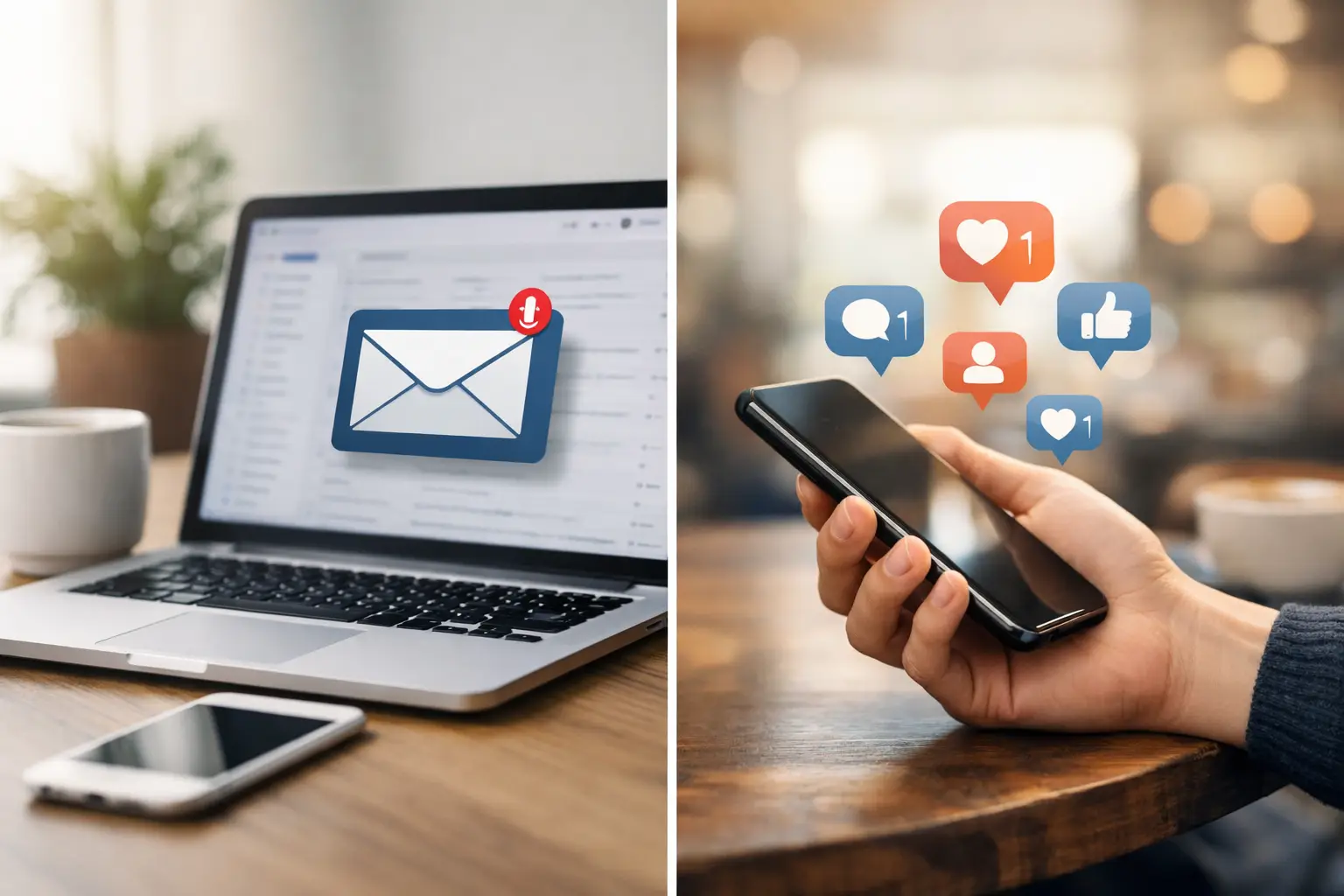
A business with 500 email subscribers can outperform one with 10,000 social followers if the goal is sales, retention, or repeat engagement. That is why the real question behind email marketing vs social media is not which channel is better in general. It is which one gives you the most control, the clearest path to action, and the best return for your stage of business.
For small business owners, freelancers, and lean marketing teams, this matters because time is limited. You do not need more channels to manage. You need channels that produce results you can track and improve.
Email marketing vs social media: the real difference
The biggest difference is ownership. With email, you build a list you can reach directly. With social media, you build access on rented platforms that can change rules, visibility, and costs at any time.
That does not make social media weak. It makes it better at different jobs. Social platforms are strong for discovery, visibility, and top-of-funnel attention. Email is stronger for nurturing, conversion, and customer retention.
If you think of your marketing as a system, social media starts conversations. Email keeps them going. Social helps people find you. Email helps them remember you, trust you, and buy from you.
Where social media does the heavy lifting
Social media is usually the faster channel when you need awareness. You can publish quickly, test ideas in public, and reach people who have never heard of your brand. That makes it useful for audience building, content distribution, and market feedback.
It also works well when your offer is visual, personality-driven, or easy to understand in a short format. A photographer, fitness coach, local bakery, or ecommerce brand can often gain traction faster on social because the product or service fits the feed.
There is also a practical advantage for newer businesses. Starting a social account is easier than building an email list from zero. You can begin posting today, learn what gets attention, and use that response to sharpen your positioning.
The trade-off is consistency. Reach on social is unpredictable. A strong post may perform well one week and fall flat the next, even if the quality is the same. Platform changes, audience behavior, and content saturation all affect visibility. You are competing inside an environment designed to distract people.
That is why social media can feel busy without feeling profitable. You may get likes, comments, and occasional spikes in traffic without building a reliable system for leads or sales.
Where email marketing usually pulls ahead
Email tends to win when the goal is action. If someone joins your list, they have given you permission to contact them directly. That shifts the relationship. You are no longer hoping an algorithm shows your content. You are showing up in a space people check every day.
This is especially valuable for businesses that sell services, appointments, digital products, consulting, courses, or higher-consideration offers. People often need more than one touchpoint before they buy. Email gives you a structured way to guide that decision with welcome sequences, offers, reminders, testimonials, and follow-ups.
Email also supports stronger segmentation. You can tailor messages based on behavior, interests, previous purchases, or lead source. That makes your marketing more relevant without requiring constant content production.
Another advantage is durability. A social post may disappear in hours. A well-built email list can support your business for years. Even a small list can produce steady results if the audience is qualified and the messaging is clear.
That said, email has its own limits. It usually grows slower than social. It requires a reason for people to subscribe, and poor email strategy can lead to unsubscribes or low engagement. You cannot just send promotions and expect loyalty.
Email marketing vs social media for conversions
If your main metric is conversion, email often has the edge. That is because email reaches people further down the decision path. They already know who you are, at least enough to opt in. Your job is not pure discovery. It is moving interest toward action.
Social media can still drive conversions, especially with paid campaigns, retargeting, and strong creative. But for many small businesses, social conversion is less direct. Someone sees a post, scrolls away, comes back later, checks your profile, then maybe clicks. There are more points where attention gets lost.
Email shortens that path. A subscriber opens a message, sees one clear offer, clicks, and lands on the next step. That makes testing easier too. You can adjust subject lines, calls to action, and segmentation and measure the results more clearly.
If you sell through trust, education, or relationship building, email usually becomes one of your highest-leverage channels once the list is established.
Cost, effort, and return
For early-stage businesses, cost matters as much as effectiveness. Organic social can feel free, but it is not low-cost if it takes hours every week and does not convert. Email tools have a direct software cost, but they can save time if your sequences and campaigns are doing repeatable work.
Social media demands ongoing creation. New posts, short videos, stories, comments, trend awareness, and regular interaction all matter. Email is more front-loaded. You need a signup offer, a welcome sequence, and a campaign rhythm. Once those pieces are in place, the system becomes more efficient.
This is one reason practical businesses often shift their focus over time. They may start with social to build attention, then invest more seriously in email once they want steadier results. The move is less about abandoning social and more about building an asset instead of feeding a platform.
Which channel should a small business prioritize?
It depends on what you need right now.
If nobody knows your business exists, social media is often the easier starting point. It helps you get seen, test messaging, and attract early attention. If your brand has a clear visual angle or your audience spends a lot of time on one platform, social can create momentum quickly.
If you already have traffic, customers, or some audience interest, email should become a priority fast. The moment people are paying attention, you need a way to keep the relationship without relying on a platform to reconnect you.
For service providers and consultants, email is often the stronger long-term play because the sales cycle depends on trust and follow-up. For creators and product-based brands, social may produce more top-of-funnel growth, but email still matters once you want repeat buyers and stronger lifetime value.
In most cases, the smartest answer is not either-or. It is sequence.
Use social media to attract attention. Use email to capture that attention and turn it into a business asset. Then use email to nurture, convert, and retain while social keeps feeding the top of the funnel.
A practical way to use both without wasting time
If your marketing feels scattered, simplify the workflow. Start with one core message each week. Turn that message into a few social posts that point people toward a useful free resource, offer, or signup incentive. Once they join your list, send them through a short sequence that introduces your offer and builds trust.
This approach works because each channel has a job. Social is not responsible for doing everything. Email is not expected to find cold audiences on its own. You are using each tool where it performs best.
A simple system might look like this in practice: publish educational or opinion-based content on social, direct people to a checklist, template, or lead magnet, then follow up with emails that help them solve a specific problem. Brands like Crumble Media Group are built around that kind of practical learning path because it respects how people actually make decisions. They need useful information first, then a clear next step.
The mistake to avoid
The biggest mistake is choosing channels based on visibility instead of business value. Social media feels active because the feedback is public and immediate. Email feels quieter, but quiet channels often produce stronger revenue because they support focused action.
Do not judge your marketing only by follower count, likes, or reach. Judge it by what it helps you build. Are you building awareness with no retention plan, or are you building a system that keeps working after the post fades?
That question usually settles the email marketing vs social media debate. Social can help people notice you. Email helps you keep the connection and make it useful.
If you are deciding where to put your next hour, choose the channel that moves someone one step closer to trust, action, or purchase. Attention is helpful. Ownership is better.











0 Comments