
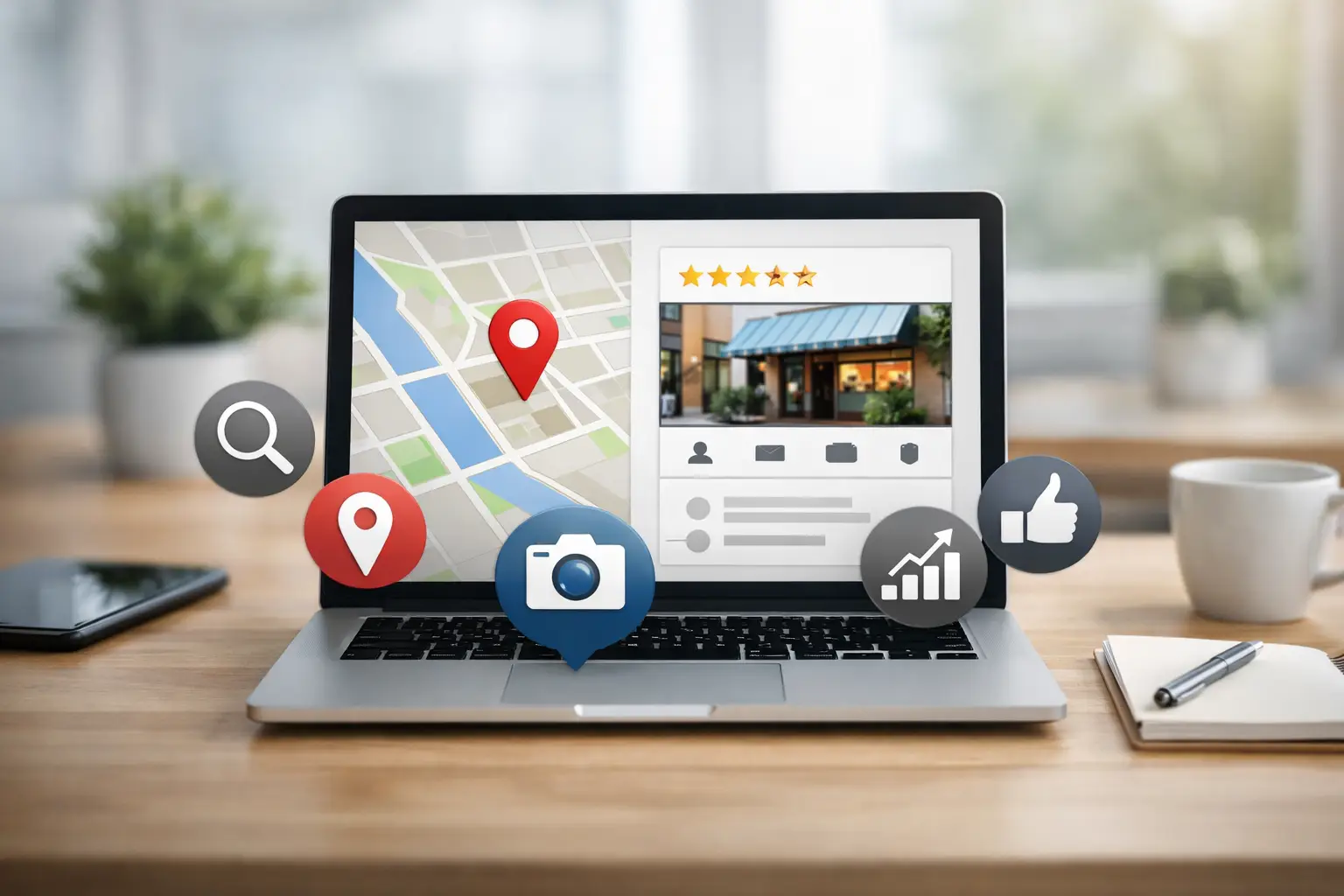
Most local businesses do not have a traffic problem. They have a visibility and conversion problem. They show up inconsistently, send mixed signals to Google, or leave their listing half-finished. That is where google business profile optimization matters. A well-built profile can improve local rankings, increase calls, and help more searchers choose you without touching your website first.
If you run a service business, local shop, agency, or solo practice, your Google Business Profile is not just a directory listing. It is often the first impression, the trust checkpoint, and the conversion page. People compare hours, reviews, photos, services, and responsiveness in seconds. Small improvements here can produce outsized gains, especially if your competitors are still treating their profiles like a set-it-and-forget-it task.
What google business profile optimization actually means
At a practical level, optimization means making your profile more complete, more accurate, and more persuasive than the average listing in your market. Google wants confidence. Searchers want clarity. Your job is to give both.
That starts with basics like your business name, primary category, address or service area, hours, phone number, website, and services. But that is only part of the picture. Optimization also includes review strategy, photo quality, business description, Q&A management, posting activity, and how well your profile matches what appears elsewhere online.
The goal is not to stuff keywords into every field. That tends to backfire or produce awkward copy that does not help users. The goal is relevance plus trust. Google uses profile completeness and consistency as signals. Customers use it to decide whether you look legitimate, current, and worth contacting.
Start with the fields that affect visibility first
If your profile is missing core information, fix that before you do anything else. A polished post schedule will not help much if your category is wrong or your hours are outdated.
Your primary category carries more weight than many business owners realize. It helps Google understand what searches you should appear for. Choose the most specific category that matches your main offer. If you are a family law attorney, use that if available instead of just attorney. If you are a roofing contractor, do not default to general contractor unless that is truly your main service.
Secondary categories matter too, but they should support your actual business model. Adding every possible option creates noise. A cleaner category set usually performs better than an inflated one.
Your business description should explain what you do, who you serve, and where you operate in plain English. Keep it natural. Mention your core services and location context, but write for people first. A strong description helps searchers confirm they are in the right place.
Services, products, and attributes deserve more attention than they usually get. These fields help Google connect your profile with relevant searches and help users compare options quickly. If you offer emergency service, online appointments, wheelchair accessibility, or women-owned status, only add what is true and useful. Accuracy matters more than checking every box.
Google Business Profile optimization is also a conversion job
Ranking higher helps, but visibility alone does not create leads. Once someone lands on your listing, they need enough confidence to act.
Photos are one of the fastest ways to improve that confidence. Use real, current images of your storefront, team, workspace, completed jobs, and products. Skip generic stock-style visuals. Searchers can usually tell. If you are a service-area business, before-and-after project photos often do more persuasive work than polished branding shots.
Reviews may matter even more. Not just the star rating, but the volume, freshness, and detail. A profile with 87 reviews spread across recent months usually beats one with 18 reviews from two years ago, even if both have solid ratings. Ask for reviews consistently, not in random bursts. Build the request into your process after a successful job, appointment, or delivery.
The way you respond to reviews matters as well. Thank people specifically. Reference the service when appropriate. Address criticism calmly and briefly. You are not only speaking to the reviewer. You are showing future customers how you handle real situations.
Messaging, booking options, and call readiness also affect results. If you enable features but do not monitor them, they become liabilities. It is better to offer fewer contact paths and respond quickly than to offer every option and miss inquiries.
The local ranking piece is part profile, part proof
A common mistake is assuming Google Business Profile optimization happens entirely inside the profile dashboard. It does not. Google also looks for proof that your business exists, serves a real area, and has authority in its niche.
Consistency across your website and other listings helps reinforce that proof. Your business name, address, phone number, hours, and service details should align. If your profile says one thing and your website says another, Google has less reason to trust either source.
Location pages and service pages on your website can support your profile when they clearly match your real offering. This does not mean creating dozens of thin pages for every nearby town. It means building a few useful pages that reflect your actual service geography and expertise.
Local relevance also shows up through reviews that mention specific services and locations, photos tagged to real work, and updates that reflect current operations. None of these elements works like a magic switch. Together, they create a stronger local trust signal.
How often should you update your profile?
Not every business needs daily activity. Most small businesses need consistency more than volume.
If your hours change seasonally, update them immediately. If you add a service, reflect it in your profile and photos. If you complete good work each week, upload new images regularly. If you have a review request process, run it every week rather than only when business feels slow.
Posts can help, especially for offers, events, announcements, or timely service reminders. But they are often overrated compared to reviews, categories, and complete service information. If time is limited, prioritize the fundamentals first. That trade-off matters for small teams.
A practical rhythm is a monthly profile check, a weekly review request habit, and ongoing photo updates as work happens. That is manageable for most owners and far more effective than a one-time setup.
Common mistakes that weaken performance
The biggest one is keyword stuffing. Adding city names and service terms unnaturally to your business name might seem clever, but it violates guidelines and can create suspension risk. Use your real business name.
Another mistake is choosing broad categories because they seem bigger. Broader is not better if it reduces relevance. The same goes for adding services you barely offer just to capture more search traffic. Misalignment hurts conversion and can attract the wrong leads.
Neglect is another issue. Old hours, outdated photos, unanswered reviews, and broken booking flows tell both Google and users that your business may not be active. That does not mean you need constant tinkering. It means the profile should reflect reality.
Then there is the duplicate listing problem. Multiple versions of the same business can split reviews, confuse searchers, and dilute signals. If duplicates exist, clean them up before trying advanced tactics.
A simple execution plan for small teams
If you want a workable approach, think in phases. First, complete and correct every core field. Second, improve trust with better photos, service details, and a review system. Third, tighten consistency across your website and citations. Fourth, maintain the profile with light, regular updates.
This is where many businesses overcomplicate the process. You do not need a massive local SEO campaign on day one. You need a clean profile, clear categories, credible reviews, and information that matches the rest of your business presence online.
For freelancers, consultants, and lean operators, this is good news. Google Business Profile optimization is one of the few marketing tasks where disciplined basics can outperform flashy tactics. You are not trying to outspend larger competitors. You are trying to look more relevant, more trustworthy, and easier to contact when someone is ready to choose.
If you want training you can actually use, that is the mindset to keep. Optimize for clarity first. Then optimize for proof. Then make it easy for the right customer to take the next step.
The businesses that win local search are rarely the ones doing everything. They are usually the ones doing the right small things consistently, long after everyone else stopped paying attention.













0 Comments