
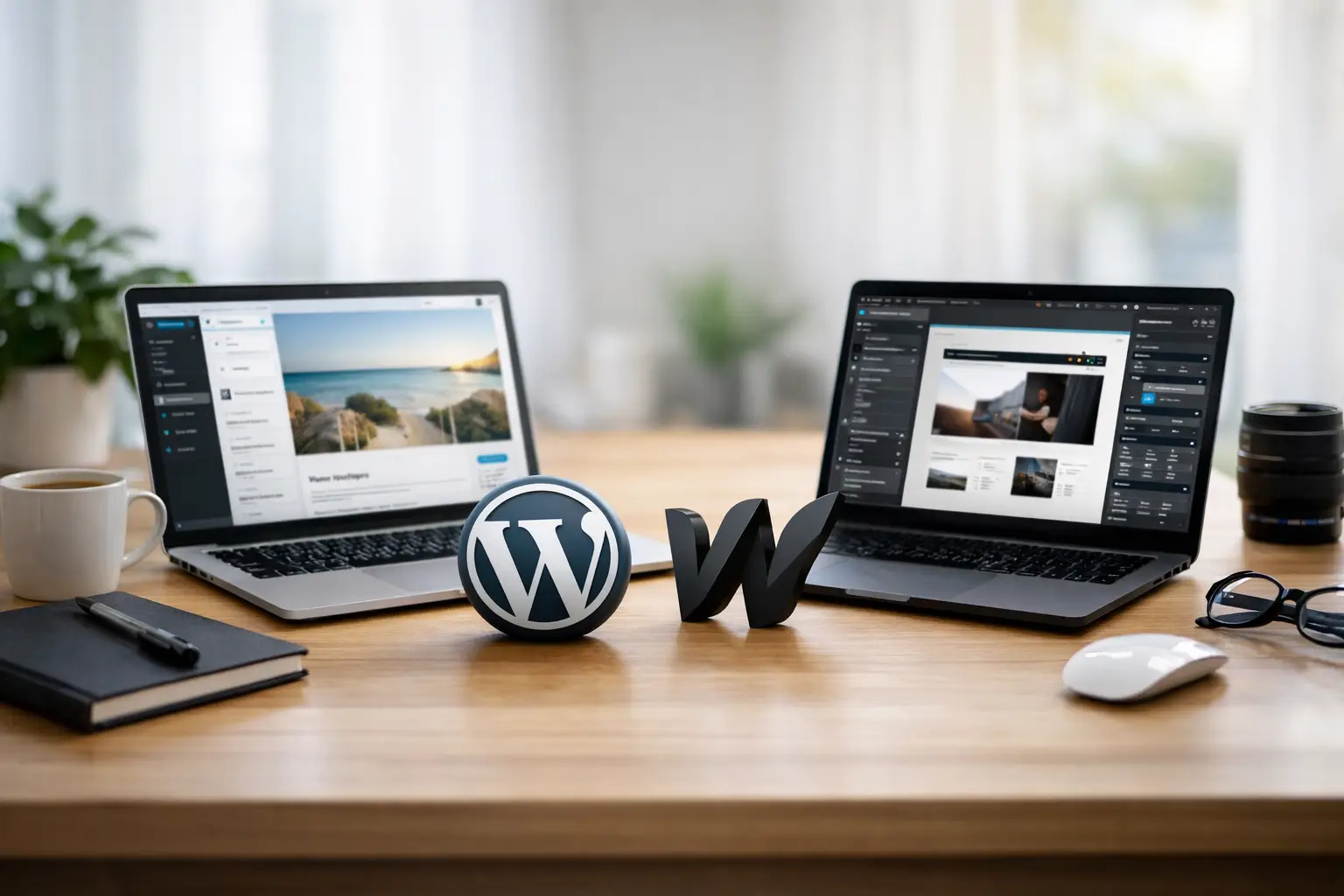
A new website can become a useful business asset or a frustrating side project that never gets finished. That is why the WordPress vs Webflow beginners debate is not really about picking the “best” platform. It is about choosing the tool you can confidently build, update, and use to support your actual business goals.
For a consultant, local service business, freelancer, or small online brand, the right answer depends on what the site needs to do next. Do you need to publish regular articles, add tools over time, and own a flexible content system? Or do you need a polished five-page site with precise visual control and fewer moving parts? WordPress and Webflow can both produce professional results, but they ask different things of a beginner.
WordPress vs Webflow for Beginners: The Real Difference
WordPress is a content management system. It was built around publishing and has grown into a highly flexible platform for business websites, blogs, stores, membership areas, landing pages, and more. With self-hosted WordPress, you choose a hosting provider, install WordPress, select a theme, and add plugins for extra functionality.
Webflow is a hosted visual website platform. You build pages in a browser using a design interface that gives you close control over layout, spacing, responsive behavior, animations, and styling. Hosting is included when you publish through Webflow, which reduces some technical setup.
The practical difference is this: WordPress usually gives you more ways to expand a business website. Webflow gives you more direct control over how the website looks and behaves on the page. Neither advantage matters if it does not match the work you are willing to do.
When WordPress Is the Better Starting Point
WordPress is often the stronger choice for beginners who see their site as an ongoing marketing system, not just an online brochure. If you plan to publish educational content, build search visibility, collect leads, add digital products, or make frequent updates, WordPress gives you a wide runway.
Its biggest advantage is its ecosystem. Themes can provide a professional starting structure, while plugins can add contact forms, search optimization tools, appointment scheduling, email integrations, analytics, ecommerce, backups, and security features. You do not need to code every new capability from scratch.
That flexibility has a trade-off. A WordPress site needs decisions. You need to choose hosting, a theme, and only the plugins that genuinely serve your goals. Too many plugins can slow a site down, create conflicts, or make future maintenance harder. Beginners sometimes mistake more options for more progress and end up with a cluttered dashboard and an unfinished website.
WordPress is a good fit if you want to create a content-driven business site, expect your needs to grow, or want access to affordable support from a large pool of freelancers and specialists. It is also practical if you prefer working from templates and block-based editors rather than designing every section from a blank canvas.
One important clarification: WordPress.com and self-hosted WordPress.org are not the same experience. WordPress.com is a hosted service with plan limitations. Self-hosted WordPress gives you more control but also puts more responsibility for hosting, updates, and backups in your hands. When business owners praise WordPress for flexibility, they are usually referring to self-hosted WordPress.
When Webflow Is the Better Starting Point
Webflow works well for beginners who care deeply about visual presentation and want fewer third-party tools to manage. It can be especially useful for designers, creative service providers, agencies, and premium brands where the site itself needs to communicate polish before a visitor reads much copy.
The Webflow Designer lets you control layouts at a detailed level. You can set containers, grids, typography, breakpoints, interactions, and reusable styles without writing every line of code. That freedom can produce a site that feels more custom than a standard template-based build.
However, Webflow is not necessarily easier simply because it is visual. Its interface introduces concepts such as the box model, CSS classes, flexbox, grids, and responsive design. You can learn these concepts through the platform, but expect a real learning curve if you have never worked with web design.
Webflow is a smart choice when you need a relatively focused marketing site, want design consistency, and are comfortable investing time in learning a visual design system. It is less ideal if your immediate priority is publishing a large volume of content quickly using familiar blog workflows, although its CMS can handle content collections well.
Compare Setup, Cost, and Ongoing Work
A beginner should not judge platforms by the first hour alone. Judge them by the work you will repeat six months from now.
With WordPress, startup costs can be flexible. You pay for hosting and a domain, then decide whether free tools are enough or whether premium themes and plugins are worth the investment. This can be cost-effective, especially for a simple site, but expenses may rise as you add paid tools. You also need a basic maintenance routine: update WordPress, update plugins and themes, confirm backups are working, and review site security.
With Webflow, hosting and the website platform are generally part of the same system. That creates a simpler operational picture. You are less likely to manage plugin updates or troubleshoot conflicts between separate tools. The trade-off is that ongoing plan costs can be higher depending on your site type, content needs, and ecommerce requirements.
Neither model is automatically cheaper. A low-cost WordPress site can become expensive if it relies on many premium plugins and custom fixes. A Webflow site can be efficient if it replaces several separate services, but it may feel costly for a very simple business site. Price the setup you actually need, not a long list of features you might use later.
Choose Based on Your Business Goal
If your primary goal is lead generation, either platform can work. The question becomes how you will create the pages, test offers, and publish useful content around them.
Choose WordPress if you want a flexible business hub. It is usually the practical choice for entrepreneurs building a blog, resource library, local SEO content strategy, ecommerce store, or educational site that will change over time. It rewards a system-minded approach: use a reliable theme, keep your plugin stack lean, and document how key tools work.
Choose Webflow if brand presentation is central to the sale. A photographer, creative studio, high-end consultant, or productized service business may benefit from the design control and clean visual system. It is also a good option when you would rather maintain one tightly managed platform than assemble a site from separate components.
Avoid choosing WordPress just because it is popular, or Webflow just because the designs look impressive. Popularity does not reduce the work of learning a platform. Design freedom does not replace clear messaging, strong offers, or a simple conversion path.
A Practical Decision Test Before You Build
Before committing, write down the first version of your site. Keep it to the pages and functions that will help you get results in the next 90 days. For most small businesses, that means a home page, service or product pages, an about page, a contact or booking path, and perhaps a small set of helpful articles.
Then answer three questions. Will you publish content at least monthly? Do you expect to add features such as courses, ecommerce, memberships, or advanced forms? Is a highly custom visual layout more important than speed of publishing? Frequent content and future expansion lean toward WordPress. Custom design control and a focused marketing site lean toward Webflow.
You can also test the workflow before making a major investment. Build one service page in each platform or work through a starter template. Pay attention to where you get stuck. The best platform is not the one with the longest feature list. It is the one that lets you make useful updates without postponing them for weeks.
Your first website does not need to be permanent. It needs to be clear enough to represent your business, simple enough to maintain, and useful enough to support the next action you want a visitor to take. Pick the platform that helps you build that version now, then improve it as your business earns the need for more.











0 Comments